


Where you give birth shapes how you give birth. The setting influences how decisions get made, which options are available, how much privacy or support you have and what happens if something changes. Every setting has pros and cons — understanding them can help you clarify what’s most important to you.
This piece in an excerpt from our print zine, Birthing While Black: A Hospital Guide, created in partnership with the BLACK Wellness and Prosperity Center in California, Tre Borden /Co and the James Irvine Foundation. The zine is NOW shipping!
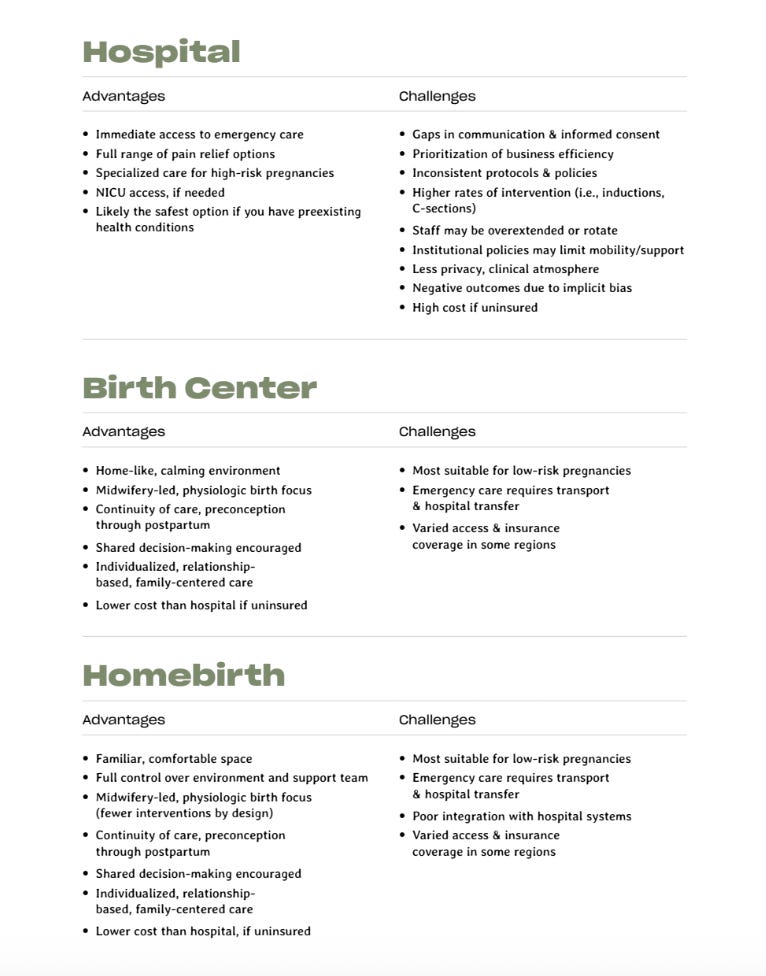
The American College of Obstetricians and Gynecologists (ACOG) recognizes that “every woman has the right to make a medically informed decision about where to give birth.” While positive home birth data does exist, much of it comes from countries with better-integrated care systems than the US — a gap we’re still working to close.
In short: do your research (you’re going to hear this from us a lot). Consider any pre-existing conditions, as well as any experiences — from beautiful to traumatic — that may shape your feelings of safety. Get familiar with your needs, preferences and options. Ask questions. If your care feels misaligned, get a second (or third) opinion. You have the right to understand what birth settings are available to you — and which are safe based on your individual health. Home births and birth centers can be great options for low-risk pregnancies. But if you have a medical condition or higher-risk factors, the hospital may be the safest choice. Knowing what’s available — and what’s realistic — helps you make confident, informed decisions.