


Like so many birth workers I know, I was called to this path after my first birth experience led me to know in my spirit: “There has to be a better way.”
In the Borne Manifesto, I spoke about moving beyond survival mode, into a reality where family-centered care is the default standard of care in birth. But some of you may be wondering, what even is family-centered care, and how is it different from “typical” care practices?
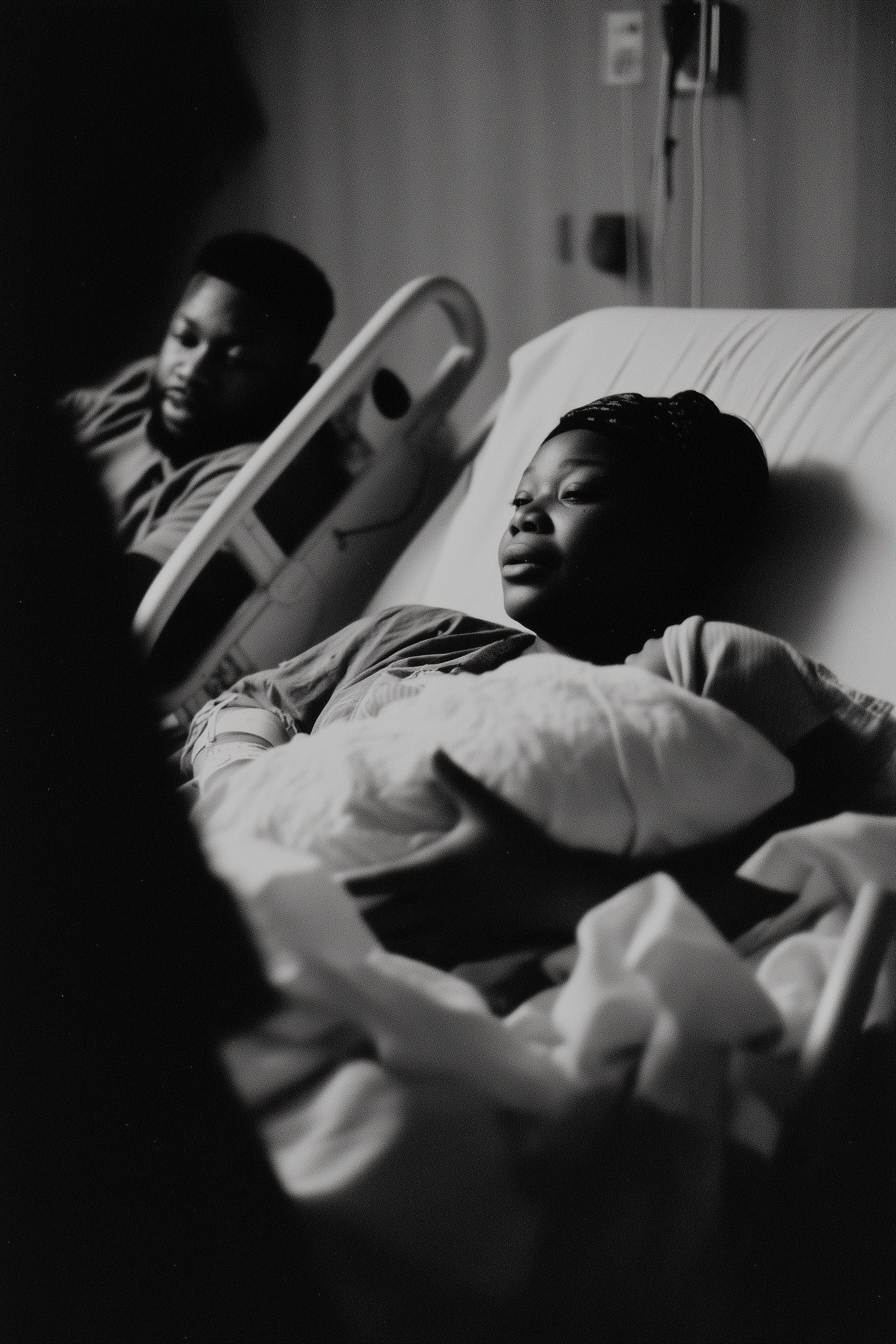
If you’re a birth worker, you’re likely intimately familiar with the midwifery and medical models of care — among others. I want to highlight a framework that doesn’t always get enough attention:
Family-Centered Care (FCC), Defined
Originally introduced in the context of pediatric care in the 1950s, family-centered care grew out of a movement to change the dehumanizing aspects of mid-20th-century hospital care.
At the time, parents were excluded from children’s care for fear of spreading infection. Children were often left alone in sterile, institutional settings. Research on the emotional trauma of separation — combined with advocacy from families and forward-thinking providers — began to change that. Over time, FCC gained wider adoption.
Listening to families (respect & dignity)
Facilitating choice (participation)
Sharing accurate information (information sharing)
Building confidence to participate in health care decision-making (collaboration)
While this all may sound pretty basic, Western medicine has long operated in a paternalistic, hierarchical model, based on “physician authority and passive patient acquiescence.” While this dynamic shifted significantly in the 1970s — following a series of scandals in medicine (unearthing of Nazi medical experiments during the Second World War and the Tuskegee Syphilis Study), as well as the civil rights and second-wave feminist movements — unfortunately the culture still reflects the seeds of hierarchy (and good ol’ fashioned patriarchy).
Far too often, today, patients’ and families’ voices are ignored, they’re excluded from the decision-making process, they experience coercion… or worse.
FCC in Maternal Health
To truly understand the importance of family-centered care in maternal health, we have to return to the history of midwifery in this country — a model that has always been family-centered, but was systematically erased with the rise of modern gynecology. This is a review for many of us, but it’s history that bears repeating, so that it’s never forgotten.
Midwifery in the U.S. has deep roots in Black and Indigenous communities, stretching back to the 17th century when enslaved African women — many already skilled in midwifery — were brought to the Americas. They carried knowledge of birth and healing that was passed down through generations.
The so-called “father of modern gynecology,” Dr. J. Marion Sims, built his reputation by leasing and experimenting on enslaved Black women in Alabama without anesthesia, beginning in 1844. As such, gynecology itself was founded on torture and chattel slavery. Given these origins, it begs the question: why do we continue to blindly trust OB-GYNs as the unquestioned authority over birth outcomes?
As late as 1900, nearly all women in the U.S. gave birth at home with midwives. That changed with the rise of privatized medicine and a targeted smear campaign that painted midwives as “unsanitary” or “superstitious.” Hospitals positioned themselves as the modern, respectable alternative — consolidating both power and profit. By 1940, only 44% of births were attended by midwives. By 1969, that number had dropped to just 1%, where it has hovered for decades.
The COVID-19 pandemic marked a turning point. Fear of hospital exposure and rising distrust of medical institutions led to a surge in home births across the U.S. — with Black women showing the sharpest increase. At the same time, birth workers — midwives, doulas, chiropractors, herbalists — have been stepping up to fill the gap, correcting miseducation and restoring a legacy of birthing in power.
Family-centered care in maternal health isn’t new. It’s ancestral. It’s rooted in midwifery. And it has always belonged to the people.
The Bridge
At Borne, we advocate for family-centered care not only because it reflects the midwifery model — which has always been rooted in listening, choice and collaboration — but because family-centered care applies even when a midwife isn’t in the room. Families deserve this level of respect whether they’re birthing at home or in a birth center with a midwife, or in a hospital with an OB-GYN.
The way we see it, FCC is the bridge. It humanizes hospital care, it reshapes OB-GYN practices, and it restores dignity — no matter the setting.
Roots of FCC in Maternity Care
One of the pioneers of family-centered maternity care was Celeste Phillips, RN, EdD. Beginning in the 1950s as well, she challenged practices that excluded fathers, separated babies, and medicated women without consent.
Her (then) radical philosophy: the childbearing experience belongs to the family, not the caregivers.
Phillips helped pioneer the single-room maternity care model, where families could labor, birth, recover and bond in one space. In her book Family-Centered Maternity Care (1994), she codified ten guiding principles that continue to shape practice today:
10 Principles of Family-Centered Maternity Care (Phillips, 1994)
Childbirth is wellness, not illness.
Care is personalized to each family’s needs.
Education prepares families for active participation.
Families make informed choices.
Partners and support people are included.
Family presence is encouraged during birth.
Continuity of space and caregivers is prioritized.
Mothers are primary caregivers for their infants.
Mother and baby are treated as a unit.
Parents remain involved in newborn care, even with high-risk babies.
The Vision
Imagine if every family in this country had access to this model. Imagine what it would mean not only for birth, but for postpartum, for parenting, for generations
Family-centered care isn’t just a model — it’s a shift in values. It says families belong at the center, not the margins. It says birth is not an isolated medical event, but a rite of passage that shapes generations.
At Borne, this is the vision we’re working toward: restoring trust, restoring dignity — restoring the village.
The Exchange: A Birth Worker Gathering — Family Centered Care

Thank you Brittsense, LP's vibe, Sankofa Ra, Auntie Eve and others for tuning into our live video! Our next Exchange will take place on October 28th, with a focus on Matrescence. Join us every 4th Tuesday for skill building, eye opening conversations for birth workers.